


Mektebi follows the way a mekteb already works. There is a calendar of the year, stages for the children to move through, a place and a time for each class, and the teaching itself.
The year, the levels and the groups
A school year is the frame. A mekteb usually runs from September to June. Groups, class times and the children's places belong to one school year, so each year starts clean. When the year ends, the mosque can start the next one and keep its levels, rooms and courses.
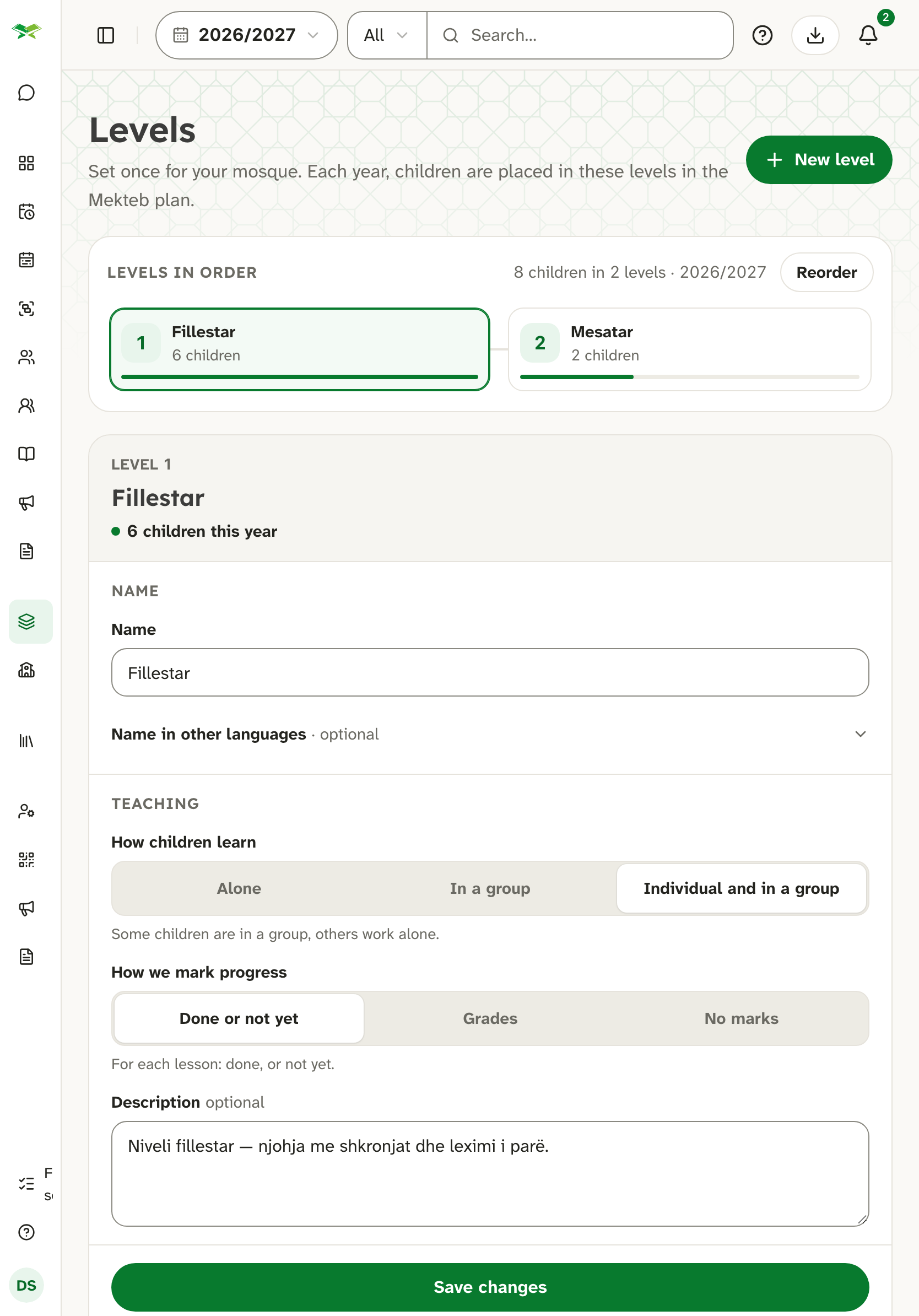
A level is a stage of the mekteb, for example Elifba, Qur'an reading or Tajweed. The mosque sets its levels once. Each year, children are placed in them.
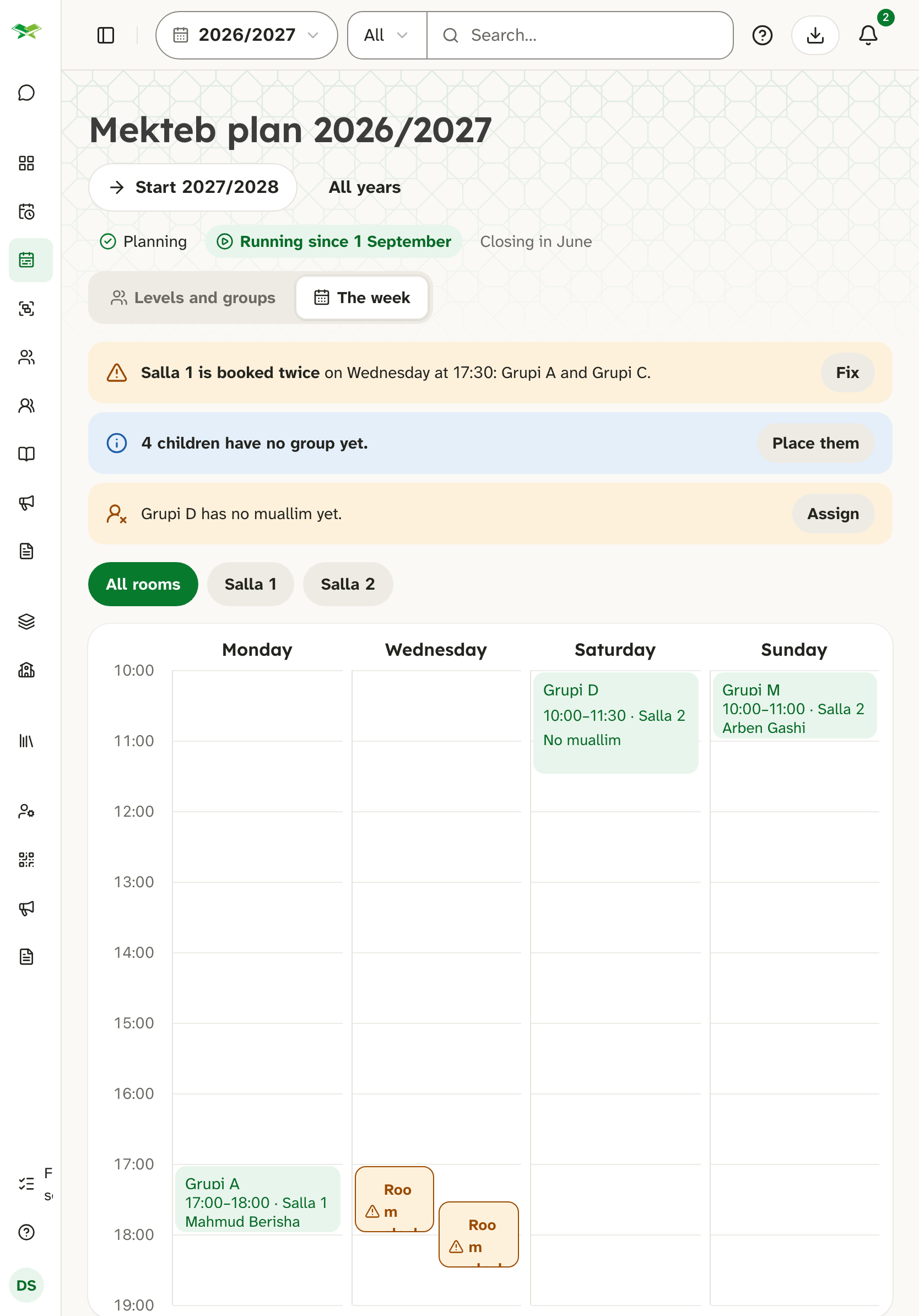
A group is a set of children who learn together with a muallim. It has a course, a room and a class time. A room is the place where the group meets. Mektebi marks two groups that would meet in the same room at the same time, so the mosque can move one.
The teaching: courses, chapters, lessons, assignments
A course holds the teaching for a level. It is split into chapters, each chapter holds lessons, and a lesson can have assignments for the students.
The mosque and its muallims write this material and answer for it. A muallim can read every course of the mosque, but changes only their own and those they have been added to. Admins can change them all.
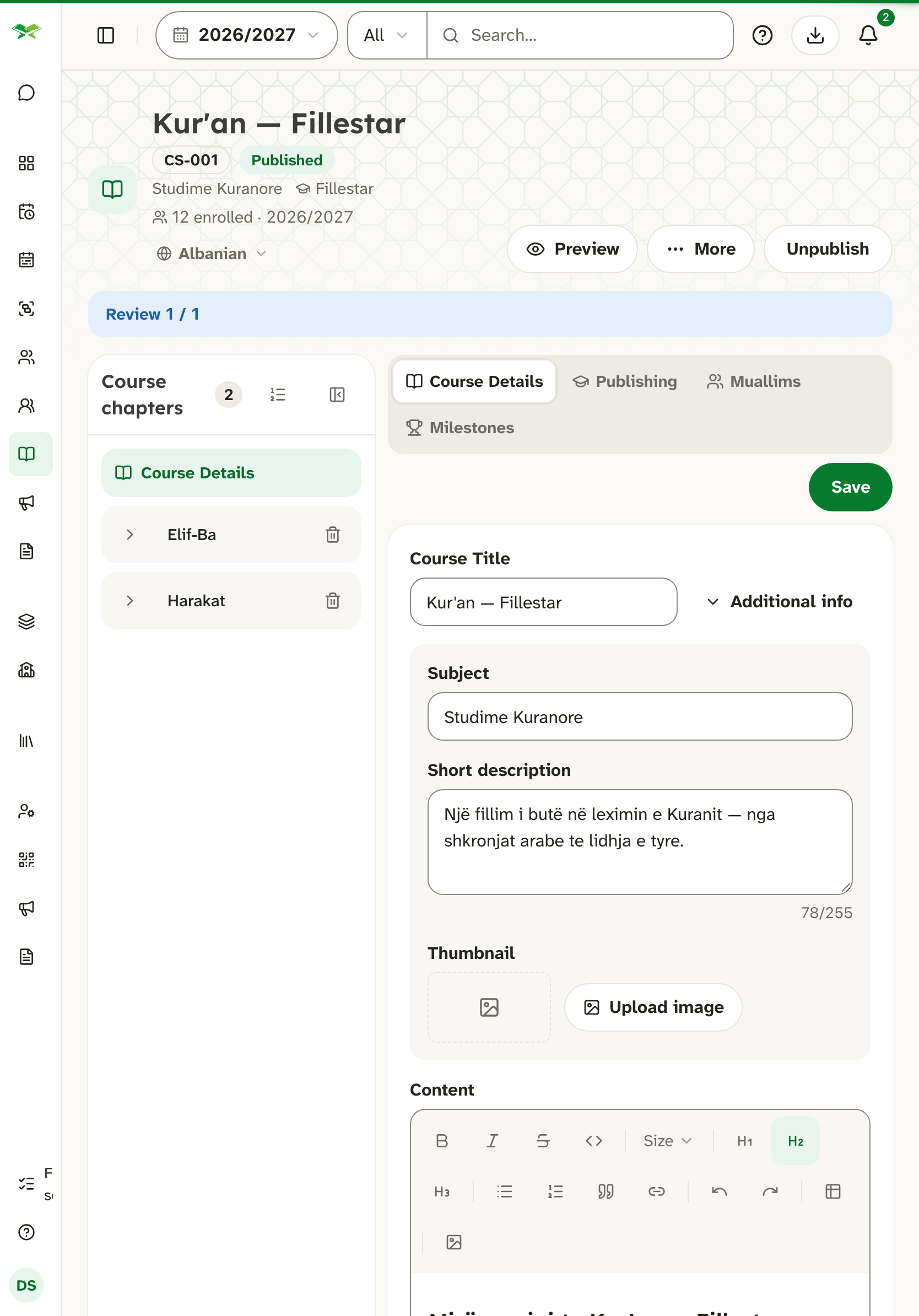
A course can be copied and reused, and a mosque may share one with others through the Library (teaching content only, never people), and it can be kept as a draft until it is ready. Students see it only after it is published.
Class days
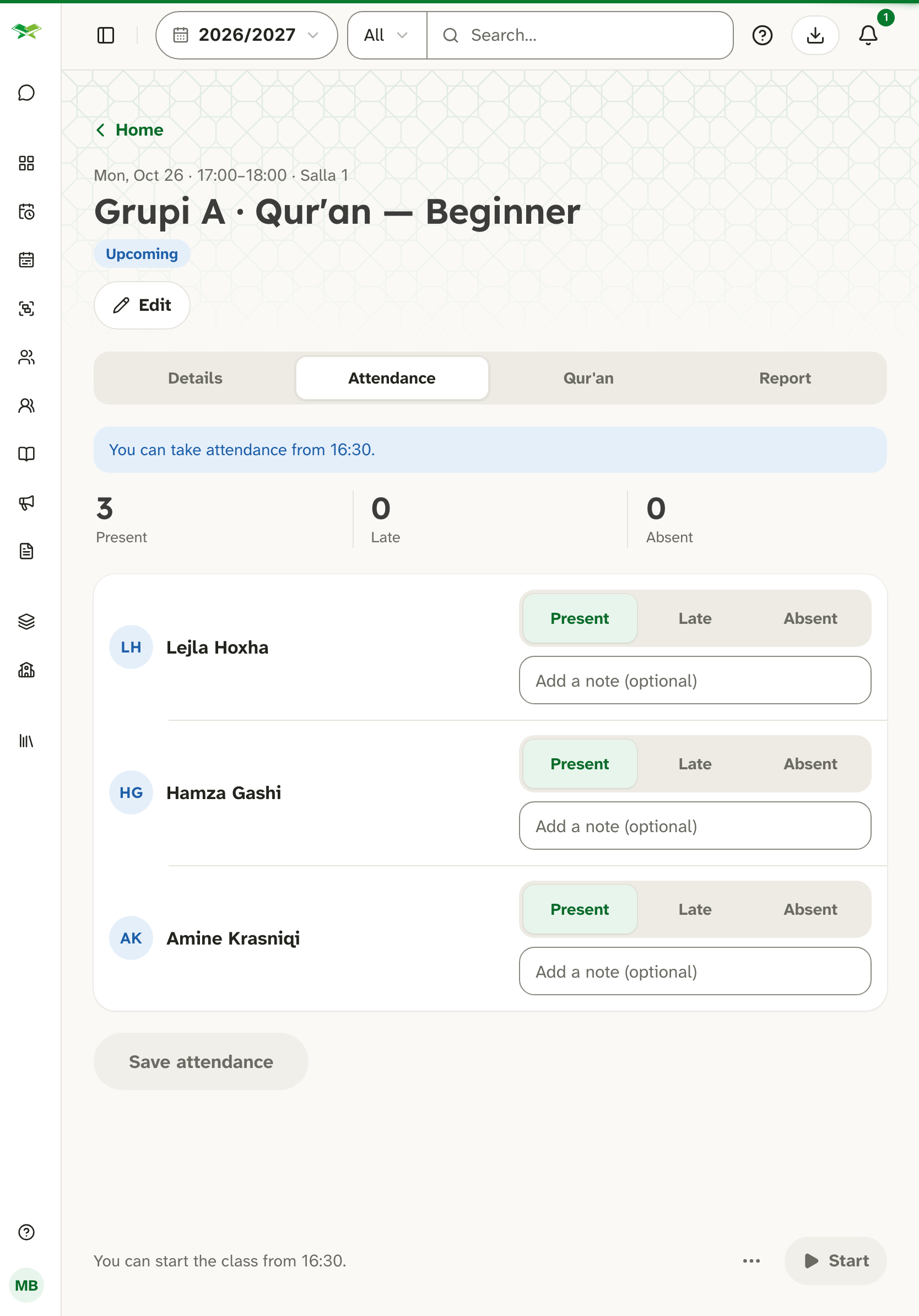
On a class day the muallim opens the session for the group, takes attendance and sees who is there. Parents can tell the mosque in advance when a child will miss class. The privacy policy describes how these absence reports are handled.
Progress and grades
Mektebi records each student's progress through the lessons, so the muallim sees where each child stands. Muallims can also give grades. Grades use one scale for everyone: the Swiss scale from 1 to 6, where 6 is best and 4 is a pass, in half steps such as 4.5. Students and parents see their own grades and nobody else's.
Progress and attendance are tools for the muallims. They do not make decisions about a child on their own.
Binding texts
The binding texts are the privacy policy, the data processing agreement and the terms. If anything here differs from them, those texts apply.